Transcript
Text on screen: Marine and Safety Tasmania logo. Using your Killswitch.
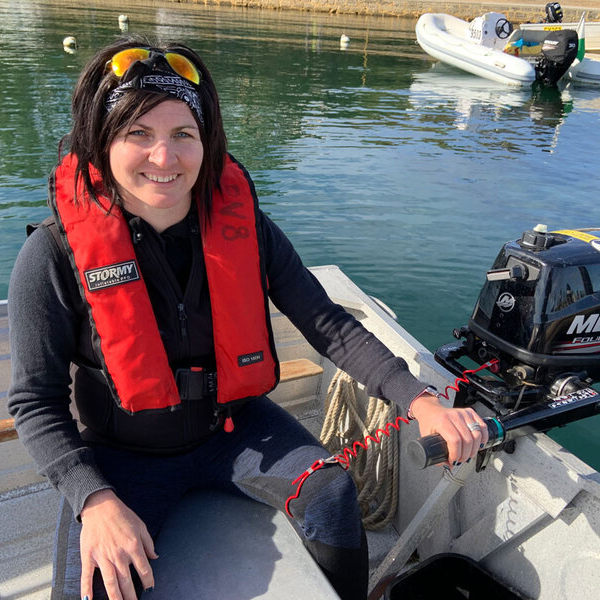
[Visual: A boat skipper operating the outboard on a small aluminium boat (also known as a tinnie) on the ocean. The skipper is wearing an inflatable lifejacket]
Skipper: Absolutely I'm using little tinnies like this one, with tiller steering.
[Text on screen: Be Boatwise. There are no second chances. Using your kill switch]
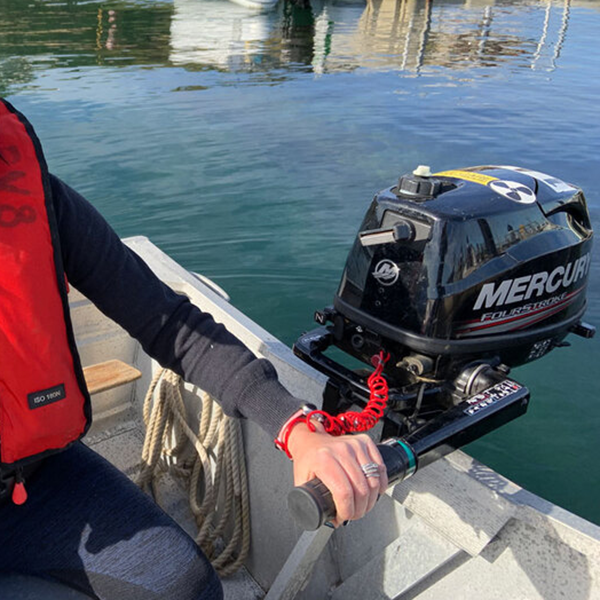
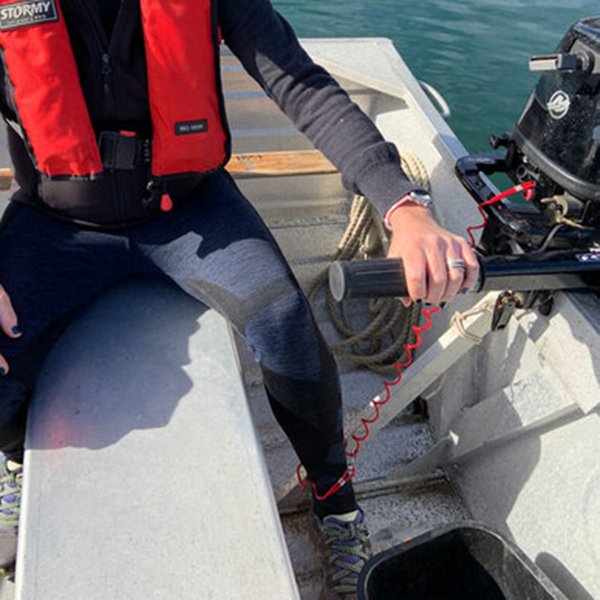
Skipper: They will get you to a lot of places and they're great for fishing and boating but one thing that a lot of people overlook is wearing your kill switch lanyard.
[Visual: The skipper stands up in the boat.]
Skipper: You wear it because if you end up in the water and your boats still running it will stop.
[Visual: The skipper pulls on the kill switch lanyard and disconnects the outboard. The boat stops.]
Skipper: You can just pop back in it, rather than it driving off on you, or even worse coming back around in the circle and trying to hit you.
[Visual: Professional skipper, Andrew Wratten puts on an inflatable lifejacket, while standing next to a vehicle on land, prepping his boat, cutting to Andrew in the boat on the ocean.]
Narrator: That's exactly what happened to professional skipper Andrew Wratten. Just a few months ago he was out by himself chasing tuna when everything went pear-shaped.
[Visual: Andrew standing next to his trailered boat talking to camera and using hand actions.]
Andrew: I was looking out the back to wait for the tuna to hook up and I was sort of standing on a bit of an angle and hand on the steering wheel, and hooked up, and you beauty, sort of stepped forward and to grab my throttle
and just as I went to grab it, I accidentally just knocked it forward and um yeah by that doing that the boat sort of lunged that way and I'm sort of just off balance and over I went and yeah, hit the water.
Lucky for me I had my life jacket on, which is an auto inflating one, so before I even knew really what was going on it went off and I was inflated and sort of looked up and there's the transom of my boat just heading that way.
[Visual: Andrew actions the boat moving away from him. The camera cuts to a view of the ocean before returning to Andrew on a beach.]
Narrator: About three k's offshore Andrew set about the long swim to safety. Twenty minutes in his boat made a frightening return traveling at 20 knots, it made a beeline straight for him.
[Visual: Andrew talking to camera.]
Andrew: I actually thought to myself you know I won't drown or anything else, I'll actually get probably taken out by my own boat hitting me.
Narrator: He managed to get out of the way, but the boat came back two more times during the three-hour ordeal.
All this could have been avoided by one simple action, clipping on the kill switch safety lanyard fitted to virtually all outboard powered boats.
[Visual: Close up view of the kill switch being clipped on to the skipper of a medium sized vessel and the skipper of a small vessel’s outboard before cutting to a broader view of the skipper operating the tinnie.]
Narrator: The safety lanyard provides a hard wire between the skipper and the engine if something unexpected happens, the engine and then the boat will stop.
Skipper 2: So, it's not just open boats and tinnies where the safety lanyard is a really good idea, this is our about it seven point three metres long and if you ever find yourself traveling alone, or perhaps with small kids, or when it's rough, the safety lanyard is your lifeline. It means that if anything happens to you, the boat will stop and that is really good piece of mind.
[Music]
[Text on screen: MAST. Marine and Safety Tasmania. Making boating better.]
End of Transcript