

About the vehicle classes
There are different vehicle classes that you can be licensed to drive or ride.
Each section has information about the types of vehicles in that class, and eligibility and experience requirements for a licence.
Any time your licence is suspended or expired can’t be included when calculating the eligibility and experience periods.
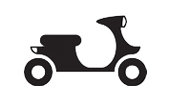
Moped (R-N class) (R class with an N condition)
A moped is a motorcycle that:
- is designed so as not to be capable of a speed exceeding 50 km/h, and either:
- has an engine capacity not exceeding 50 cc, or
- is not powered by a piston engine.
- whether or not it is also capable of being propelled by pedalling but does not include a power assisted pedal cycle.
| To hold this class | To take driving/riding lessons | Licence authorisation |
|---|---|---|
|
Minimum age 16 years.
|
Minimum age 15 years 6 months.
|
If you are authorised to drive an R-N class vehicle you may ride any moped.
|
If you are authorised to drive Car (C class) (Unrestricted) vehicles you may drive any: Moped (R-N class).
What is the difference between a moped and a scooter?
Mopeds and scooters are very similar in appearance but have a few fundamental differences. Scooters are motorcycles that have a step-through style frame. They generally have smaller wheels than a motorcycle and an engine positioned closer to the rear wheel.
When the engine capacity or top speed exceeds the specifications for a moped (i.e. above 50 kph or above 50 cc), the motorcycle is often referred to as a scooter, and the appropriate licence class is required in order to ride it.
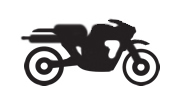
Motorcycle (R-E class) Learner Approved Motorcycle Scheme (LAMS) approved
A LAMS approved motorcycle:
- has a power-to-weight ratio up to 150 kilowatts per tonne (kW/t); and a maximum engine capacity up to 660cc or is powered by an electric powered engine with a power output up to 25kW
- doesn’t include a moped.
It is your responsibility to make sure you’re riding an approved motorcycle.
Western Australia currently uses the New South Wales LAMS list, which is available on the Transport for NSW website. A search tool is available to help you check whether a motorcycle is approved.
Note: Motorcycle power and weight is based on manufacturer data supplied for Australian Design Rules compliance. Motorcycles cannot be modified or restricted in order to have them reclassified as LAMS-approved.
| Experience required to upgrade your licence or remove a restriction | When you can start learning to drive | Licence authorisation |
|---|---|---|
|
No experience required (minimum age 17 years). |
As soon as you turn 16 years of age.
|
If you are authorised to drive R-E class vehicles you may ride any:
|
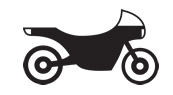
Motorcycle (R class)
A motorcycle with an engine capacity exceeding 660 cc or a power to weight ratio exceeding 150 kW/t.
| Experience required to upgrade your licence or remove a restriction | When you can start learning to drive | Licence authorisation |
|---|---|---|
|
Must have held a Motorcycle (R-E class) licence for at least 2 years.
|
On attaining your restricted motorcycle (R-E class) licence.
|
If you are authorised to drive R class vehicles you may ride any:
|
Holders of an R-E class licence that was issued prior to 5 November 2018, may elect to sit a PDA to upgrade to an R class licence after having held the R-E licence for a minimum period of 12 months.
Trike motorcycle (R-E and R classes)
Trikes are defined as 'a motor vehicle with 3 wheels, but don’t include a 2 wheeled motor vehicle with a sidecar attached to it that is supported by a 3rd wheel'.
A person who completes a Practical Driving Assessment (PDA) on a trike doesn’t demonstrate sufficient balance skills for the Director General to be satisfied that they can safely ride 2 wheeled motorcycles.
Accordingly, the R-E or R class granted to these applicants will be restricted with condition code 31 (restricted to ride motor trikes only).
These applicants are subject to the same eligibility criteria as other motorcycle applicants (e.g. they must hold an R-E class for at least 2 years before applying for an R class).
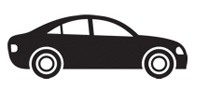
Car (C class)
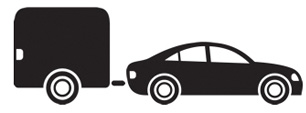
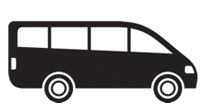
A motor vehicle with a Gross Vehicle Mass (GVM) not greater than 4,500 kg and constructed or equipped to seat no more than 12 adults (including the driver).
| Experience required to upgrade your licence or remove a restriction | When you can start learning to drive | Licence authorisation |
|---|---|---|
|
No experience required (minimum age 17 years).
|
No experience required. You can get a learner's permit at 16 years of age.
|
If you are authorised to drive Car (C class) (Unrestricted) vehicles you may drive any:
|
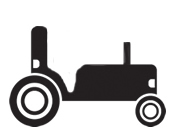
Light Rigid (LR class) heavy vehicle
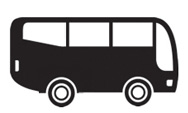
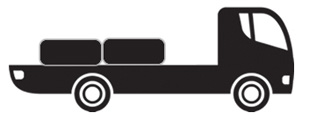
A motor vehicle with a GVM over 4,500 kg to a maximum of 8,000 kg (no axle limit) or which carries more than 12 passengers (including the driver) to a maximum of 8,000 kg.
| Experience required to upgrade your licence or remove a restriction | When you can start learning to drive | Licence authorisation |
|---|---|---|
|
Must have held a Car (C class) licence for at least 1 year.
|
On attaining your Car (C class) licence.
|
If you are authorised to drive Light Rigid (LR class) vehicles, you may drive any:
|
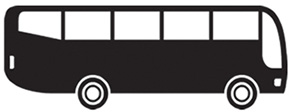
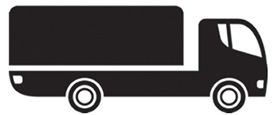
Medium Rigid (MR class) heavy vehicle
A motor vehicle that has 2 axles and a GVM greater than 8,000 kg.
| Experience required to upgrade your licence or remove a restriction | When you can start learning to drive | Licence authorisation |
|---|---|---|
|
Must have held a Car (C class) licence for at least 1 year.
|
On attaining your Car (C class) licence or Light Rigid (LR class) licence.
|
If you are authorised to drive Medium Rigid (MR class) vehicles you may drive any:
|
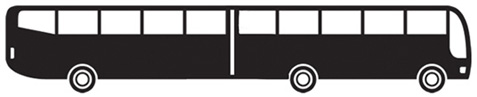
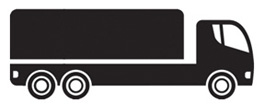
Heavy Rigid (HR class) heavy vehicle
A motor vehicle that has 3 or more axles and a GVM greater than 8,000 kg.
| Experience required to upgrade your licence or remove a restriction | When you can start learning to drive | Licence authorisation |
|---|---|---|
|
Must no longer be a provisional licence holder and have held:
(Minimum age 19 years) |
|
If you are authorised to drive HR class vehicles you may drive any:
|
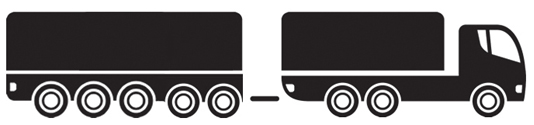
Heavy Combination (HC class) heavy vehicle
A prime mover to which is attached a single semi-trailer plus any unladen converter dolly, or rigid motor vehicle attached to a trailer that has a GVM greater than 9,000 kg plus any unladen converter dolly.
| Experience required to upgrade your licence or remove a restriction | When you can start learning to drive | Licence authorisation |
|---|---|---|
|
Must no longer be a provisional licence holder and have held:
|
On attaining your Medium Rigid (MR class) licence, or Heavy Rigid (HR class) licence. |
If you are authorised to drive Heavy Combination (HC class) vehicles you may drive any:
|
Multi Combination (MC class) heavy vehicle
Any heavy combination unit towing 1 or more trailers, each having a GVM greater than 9,000 kg. Multi Combination vehicle driver assessments are conducted by private training organisations.


| Experience required to upgrade your licence or remove a restriction | When you can start learning to drive | Licence authorisation |
|---|---|---|
|
Must no longer be a provisional licence holder and have held:
|
On attaining your Heavy Rigid (HR class) licence or Heavy Combination (HC class) licence. |
If you are authorised to drive Multi Combination (MC class) vehicles you may drive any:
|
Special tractor vehicle classes
These vehicle classes are included within the National Driver Licensing Scheme classifications.
If you have a driver’s licence for C class vehicles and you need to drive tractors that fall within the heavy vehicle classes, you can apply for a conditional authorisation to drive these types of tractors.
If applying for conditional authorisation for a vehicle class above Heavy Rigid (HR) you must be at least 18 years old.
There’s information on how to apply on our agricultural industry page.
Agricultural vehicle driver's licence
You don’t need a driver’s licence to drive a tractor or agricultural vehicle on private property. You’ll need the appropriate driver’s licence if you need to drive the vehicle on a public road. You may also need a permit from Main Roads Western Australia (MRWA) if the vehicle is oversize or over-mass.
If the vehicle you want to drive on a public road has a GVM equal to or less than 4,500 kg, you must hold an appropriate C (car) class driver’s licence.
If the vehicle you want to drive has a GVM over 4,500 kg, you must hold an appropriate heavy vehicle driver’s licence.
Some towed agricultural implements don’t need to be licensed, as they fall within the definition of a trailer. Drivers of vehicles (including tractors) towing these implements anywhere other than on private property, must hold the appropriate licence class.
Heavy vehicle pilot licence
To drive an escort vehicle on a public road, you’ll need a heavy vehicle pilot licence as well as holding the relevant WA driver's licence for the class of vehicle being driven. Information on obtaining a heavy vehicle pilot licence is available via MainRoads WA.